Posts Tagged ‘New Sales Team’
The Poetry of Business Growth
I deliver Business Growth, by leading a great team
I show them how team success, helps achieve their dreams
The chance to make a difference and to do something good
The chance to build their skills and grow as as they should
The chance to provide, a future for their family
And build this future on merit, success and security
With all the barriers removed and no reason to hide
They will rise to success on the platform I provide
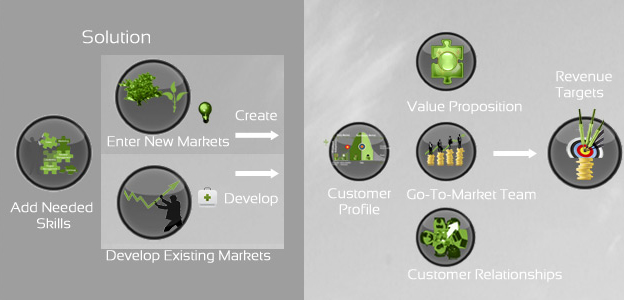
I start with Customer Profile and a Value Proposition,
Then the team to deliver, Customer and Revenue ambitions
Efficient and effective with tools, training and skills addition
We Begin and Establish Growth and later Optimise our position
From Market Entry to Development, it’s the same approach I feel
Better to use experience and process, and not reinvent the wheel
Diagnose the Challenge first, and then onto Solution creation
And then a project plan, for controlled Implementation
Customer Service: The John Lewis Way
I recently had the pleasure of working inside John Lewis and experiencing first hand how they deliver customer service that’s admired. I enjoyed working with the company. The customers and staff (partners) are in general happy, very polite and helpful and the company has a great atmosphere which is a credit to them. This has not happened overnight. The trust that customers have in John Lewis takes a long time to build but much easier to lose. How have they created this? First are the founding principles of Customer Service in John Lewis –
“Be honest; give respect; recognise others; show enterprise; work together; achieve more.”
Then my impressions…
1. “We’re Based on the Notion that if we Treat our Partners well, it will lead to Good Customer Service.”
This is a simple idea but one few companies really put into practice. John Lewis implement it in a number of ways:
- Partnership
- Staff are called and treated as partners
- All partners are owners in the business and get a yearly bonus based on performance
- Managers served staff at Xmas lunch
- Partnership concept breaks down barriers and creates meritocracy
- Respect
- Respect for each other and for customers is a core value within John Lewis
- Managers and staff were generally very helpful to one another and to customers
- No difference between how customers and partners were treated…indeed partners were often customers
- Trust
- Trust partners and empower them to do well
- In general partners were given space to to their jobs and to succeed and
- Soft Benefits to create family effect
- Subsidised canteen, discount card, subsidised, sports , subsidised concerts, holiday homes etc…
- Social club with great parties etc.
2. Empower Staff
- Train staff well
- Empower them to make do the right thing. This may be asking a manager or acting on the customer’s best interests depending on the situation. They are encouraged to think outside the box once the basics have been understood and acted upon. Staff are expected to show enterprise in the right context
- Staff are product experts in their areas and have built up this expertise over time and through training.
- Be honest – if you don’t know do not waste the customer’s time. Find somebody with the right answer. Bring the customer to the answer if required.
3. Get and Act on Customer Feedback
- Headquarter staff spend a few days serving over peak periods. This helps to give better customer service overall but also gives them immediate insight into the problem areas that customers are facing.
- Staff are expected to communicate issues regularly and many forums are created whereby this is done in a formal way
4. Make Online and Store seamless
- Returns for online can be done in store at any till with systems work behind the scenes to improve this process ongoing. This can be much better than having to repackage it and post it back to other online retailers.,
- Maintain exceptional customer service online. Customers have access to people when they need it and can use Waitrose and John Lewis stores to pick up their purchase rather than missing the delivery at home.
- Online is becoming a huge part of the overall service offered by John Lewis allowing customers to purchase when stores are closed. The John Lewis Clearance sales started on Xmas eve.
5. Make Customers Life Easy
- Shopping can be stressful and unpleasant in the wrong environment. John Lewis try to help make it a pleasant environment.
- Create a calm environment that is pleasant to look at and products are easy to find. Do not overburden with selling messages in flash colours
- Keep queues to a minimum by hiring temporary staff for peak times to help at till as and free up existing staff to answer questions and give advice. Also deploy HQ staff to help out.
- Provide a customer collection point that will collect all customer purchases in one location to ensure that they are not overburdened with bags
- Provide home delivery options from store
- Provide delivery options to John Lewis or Waitrose stores
- Provide extensive gift list and gift wrapping services
- Staff are honest and if they cannot answer will say so but will find someone who can and will not leave the customer until they are assured that the customer is being served by someone able inside John Lewis.
6. Be Different
- Never knowingly undersold
- John Lewis will match competitor prices if evidence is presented that is relevant and reasonable.
- Staff are empowered to do this on the fly with manager’s approval.
- Systems will support on the fly one off discounting.
- Have an exceptional returns policy
- John Lewis customers are trusted implicitly and when they bring back a product that they are not happy with it is changed often without question. This could be abused but at a macro level this creates tremendous good will and indeed more purchases. Often customers need to see the product in the home environment before being really sure and if they could postpone or not purchase if the returns policy was too difficult.
- Have an exceptional warranty on electricals
- John Lewis provides market leading warranties on electrical items whilst maintaining competitive prices.. This has become more important a sthe options on the high street narrow.
7. Hire people who share the John Lewis vision
- Hire people who will take on the values of John Lewis and take it forward. The gatekeepers that hire staff into John Lewis have an important job to hire people that will not abuise the trust and respect gievn to them by partners and customers.
Leadership Insights
Leadership Questions

Leadership has historically caused much debate and raised many questions:
- Are leaders born or made?
- What makes a leader?
- Do different environments require different leaders.?
- Is a leader, a leader all of the time?
The good news is that we all can be leaders. It requires the right circumstances. It requires practice.
We will not be leaders all of the time but we need only be leaders for enough time to get the job done.
The following will explore these questions in more detail.
What is leadership?
Aristotle defined leadership as requiring Knowledge,Skills and Practical Wisdom – the ability to see the good and realize it in a specific situation. All three are necessary and mutually supportive.
In The Art of War, Sun Tzu characterized leadership as a mix of five traits: Intelligence, Credibility, Humaneness, Courage, and Discipline.
Montgomery defined leadership as:
“The capacity and will to rally men and women to a common purpose and the character which inspires confidence”.
The Arbinger Institute talks about self deception & “being in the box”. Being “in the box” means being being boxed in by your fears, doubts, uncertainties and limiting beliefs such that you do not connect with others and do not focus on that you care about. Good leaders are honest with themselves and are ” in the box” much less of the time.
Peter Drucker states “Your first and foremost job as a leader is to manage your own energy, and help manage the energy of those around you”.
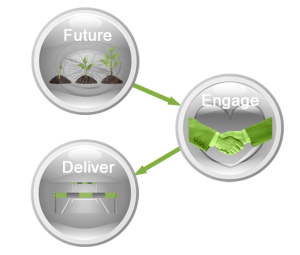
Steven Radcliffe talks about a leader:
- Creating a vision of a better future
- Engaging a team to commit their energy to deliver such a future
- Delivering results
As a leader, you must care for a better future
Leadership is not just about competencies, skills and personality. It’s first and foremost about being in touch with what you care about and then going for it. You won’t be a great leader for things you don’t care about!
By its nature a better future involves working in areas that are new and where you are instigating change to achieve this better future. Managers normally focus on delivery within defined parameters and deal with much less uncertainty.
A better future requires strategy and planning once the idea has been conceived. This will ensure that it is indeed a better future.
You must be at your best more of the time
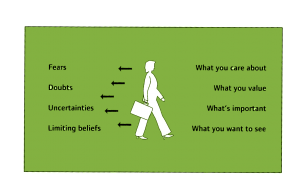
Peter Drucker states “Your first and foremost job as a leader is to manage your own energy…..and then help manage the energy of those around you”.
It does all start with you, how you manage yourself to be at your best more of the time.
If you are at your best, you are focussed on the future and not held back by the present. You are more engaging and this creates a powerful platform to help others to be at their best.
The Arbinger Institute talks about “being in the box”. Being in the box means not being being boxed in by your fears, doubts uncertainties and limiting beliefs such that you do not connect with others and do not focus on that you care about. Good leaders are in the box much less of the time.
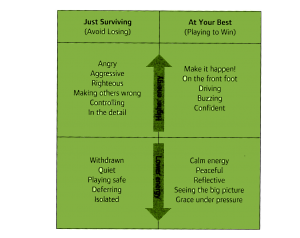
All of us have the capability to be leaders but we need to believe in ourselves as a leader and get into the right frame of mind. An effective leader is “Playing to Win” and is not just “Trying not to Lose”. As an effective leader you are “At Your Best” and not “Just Surviving” . An effective leader will exhibit high energy or low energy at different times for different tasks. These are not fixed states. We all are in all of these some of the time. We will not be leaders all of the time. But the best leaders manage to be in “Play to Win” and “At Your Best” states most of time.
You must help others be at their best more of the time
Leaders must make big requests so they must have relationships that are big enough to get the job done.
They must help people be at their best. They must help them overcome their limitations – their fears, doubts, uncertainties and limiting beliefs and to focus on what they care about.
Leaders must look for and remove obstacles in the environment that are hindering team progress.
You must engage others to care about your vision of the future.
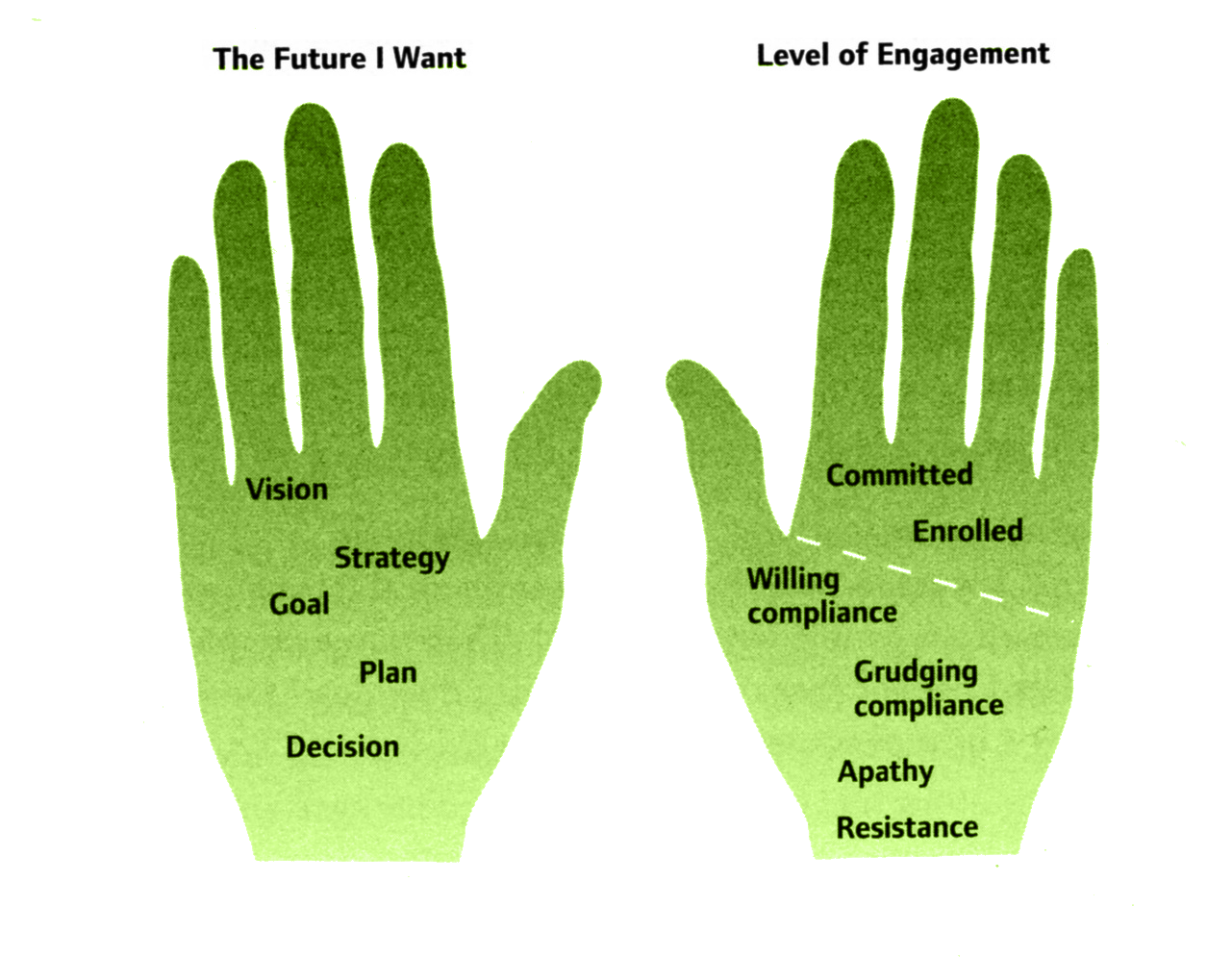
Engage people so they want to work with you and build a future with you.
Crucially engagement is absolutely distinct from ‘communicating to’, ‘presenting at’ or telling.
It is about how you connect with people, how you stimulate their thinking and impact their energy.
Engaging others is a two-way interaction and its something that happens inside your relationships. It is about your ability to build relationships big enough to get the job done.
Engagement is about taking people through resistance, apathy, grudging compliance, willing compliance, to enrolled and finally to committed.
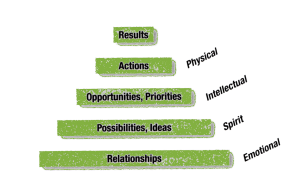
Engagement is:
- supported by building Relationships big enough to get the job done
- fuelled by Possibilities that others can see for themselves linked to the Future they want
- sharpened by agreement on specific Opportunities and Priorities
- creating a bridge to Deliver by making Big Requests of others to elicit Promises to take Action.
You must deliver results
Delivery is not standalone
Delivery is where we are all judged, is the most visible part of leadership but is not standalone. Without a compelling Future and without engaging in that future delivery of the right results will not happen.
Delivery requires you to mean it
To get great delivery you have to mean it when you make big requests. Meaning it means that your team is in no doubt of your expectations from what you say and from what you do.
For instance…making too many requests may well mean that none are done well. Not following up may mean that your team becomes distracted. Remember the maxim ” people do what you inspect, not what you expect”. There are no avoiding some difficult converstations when performance falls below that required or expected.
In delivery a leader is expected to exhibit fierce resolve, emotional fortitude, focus, discipline and resilience to ensure that the team remains focussed, acts with high energy and delivers results.
Deliver today but grow people to deliver even more tomorrow
Get the best from yourself and others today but commit to growing yourself and others so that the capability to deliver increases into the future.
How do we become leaders?
We become leaders through 1. Conscious Practice, 2. Using a Personal Support Team 3. Knowing and Going beyond our limits and 4. Being in the right State of Mind.
Conscious Practice.
Conscious Practice. You do most of your learning in real-life situations and the more you practice the better you get. Consciously use situations and challenges as opportunities to learn and grow.
- Be guided by the future you want
- Embrace the big picture
- Engage rather than transmitting/communicating
- Build Big Relationships
- Manage your Shadow (Don’t be “in the box”, manage yourself such that your uncertainties or anxieties do not cast a shadow on your team. Be in a position to help your team be at their best)
- Make Big Requests
- Maximise Probability of Delivery
- Acknowledge acceptable Delivery
- Fix Delivery that has problems
- Wrap Up
Use a Personal Support Team
Use a personal Support Team for feedback. Identify the specific ways you want to grow as a leader, tell selected colleagues and ask them to rate you now. Then ask them if they’ll watch out for you in these areas to help you make progress.
Know and go beyond your limits.
- Get beyond the present
- Embrace the big picture
- Accept that you will not know how to achieve your Future
- Believe you are a leader
- Be in leader mode (rather than operator/manager mode)
- Overcome: I’m only….I’m not….I’m just…
Be in the right state of mind
Recognise your state of mind and work out how to ensure you are “At Your Best” and “Playing To Win”.
Recognise the triggers that push you into “Just Surviving” mode and ensure you manage or avoid them to spend more time “Playing to Win”.
Creating Customer Solutions
Understand: the Customer’s Business Model
A business model is made up of the following elements:
- Customer Segments Served: Who are they creating value for? Who are their most important customers?
- Value Propositions: What value are they delivering to customers? What customer’s problems are they helping to solve? Which customer needs are they satisfying?
- Channels to Market: Through which Channels do their Customer Segments want to be reached? How are they reaching their Customer Segments now?
- Customer Relationships: What relationships do each of the customer segments expect? What ones have been established? How costly are they?
- Revenue Streams: What value are customers willing to pay and what are they currently paying?
- Key Resources: What key resources are required by Value Proposition, Channels, Customer Relationships & Revenue Streams?
- Key Activties: What key activities are required by Value Proposition, Channels, Customer Relationships & Revenue Streams?
- Key Partnerships: Who are their Key Partners & Key Suppliers. Which Key Resources are they acquiring from partners? Which Key Activities do partners perform?
- Cost Structure: What are the most important costs inherent in the business model? Which Key Resources are the most expensive? Which Key Activities are the most expensive
Diagnose: Pain Points
Diagnose where the customers pain points are in their business model:
- Find new customer segments?
- Create new value propositions?
- Reach customers more effectively?
- Increase Revenue Streams?
- Provide new key resources or key resources with better attributes?
- Increase key activities efficiency?
- Replace one of their key partners?
- Reduce cost structure ?
Create: Solution
Create a solution:-
- Define benefits
- Define investment
- Demonstrate capability using references and endorsements
- Communicate in customer’s language showing Return On Investment.
Communicate: Solution
Resolve concerns on solution, risk and price.
Communicate in customer’s language showing Return On Investment.
Deliver: Solution
Deliver the solution.
Use project management tools to manage delivery.
Demonstrate that benefits have been delivered. Ensure customer satisfaction.
Sales Leadership
What is leadership? What is the purpose and function of the leader? It is to deliver business growth and is achieved by 1-Set Objectives, 2-Engage & 3-Deliver.
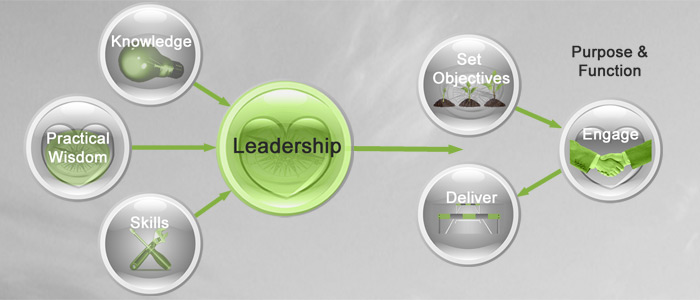
Leadership
Leadership
The sales leader purpose is to deliver business growth and leads both direct and virtual teams to achieve this objective. Leadership is therefore key to business growth success.
Aristotle defined leadership as requiring Knowledge, Skills and Practical Wisdom – the ability to see the good and realize it in a specific situation. All three are necessary and mutually supportive.
Montogomery defined leadership succinctly as:
“The capacity and will to rally men and women to a common purpose and the character which inspires confidence”.
The purpose in an organisation has multiple levels. The company will normally have a vision which states why the company exists and how it will make the world a better place.
The sales team itself has a specific purpose that serves the achievement of this vision and as such will have specific objectives. The sales leader’s overall purpose is to deliver business growth. This is achieved as follows:
- Set achievable but challenging Objectives (or targets) within the context of the vision of the organisation.
- Engage his team to accept these objectives wholeheartedly and in good spirit and then to
- Deliver the performance necessary to achieve these objectives.
Leadership Model
Leadership is not fixed and is dependent on the task at hand. It is also dependent on the type of organisation whether transformational or transactional and on the maturity of the organisation. But I find the following simple model of leadership useful.
A leader requires Knowledge, Skills (&Tools) and Practical Wisdom.
 Practical Wisdom
Knowledge may be learned, Skills may be practiced but Practical Wisdom is grown through through experience and reflection. Practical Wisdom is the ability to see the good and realize it in a specific situation. In other words to decide and do what is effective to achieve the required objectives.
This is not a set of universal rules to be learned or a pocket guide to be drawn upon for the correct solution. It is something only achieved through experience and reflection. It is realized through the ability to relate new experiences to previous experiences, in other words to recognize patterns in situations that facilitate understanding and resolution.
Practical wisdom is supported by the qualities of the leader.
The following list is in a generic order of priority. It is derived from the book “ How to Grow Leaders” by John Adair.
- Enthusiasm. A leader must demonstrate unquenchable enthusiasm for the achievement of the agreed goal.
This may be quiet and slow-burning enthusiasm rather than the heat and fireworks of passion, but it is always there. - Integrity. The quality that engenders trust. Trust is the foundation for all human intercourse.
- Demanding – coupled with Fairness. A leader has high standards and will not compromise on them.
But is also consistent, fair and will not ask of others more than he asks from himself. - Humanity. The raw material with which a leader has to deal with is people and must understand them and go with the grain.
- Confidence. No leader can operate without a quiet confidence.
- Humility. The result of having a proper sense of one’s own limitations.
Its hallmarks are a readiness to listen and to be taught, a willingness to admit when one is wrong, and a reverence for others. - Courage. Demonstrated by doing what is right, because the leader believes it to be right and despite criticism.
 Knowledge & Skills
The knowledge and skills required may be described as:
- (1) situational skills and knowledge i.e. those relating to the particular situation which in this case is sales
- (2) generic leadership skills.
Situational Knowldege and Skills
Good Sales & Marketing knowledge & skills are the most obvious. General Management knowledge & skills enable better empathy and good communication with senior customer executives.
Project Management knowledge & skills enable better management of internal resources, better bid management and better planning. Technical knowledge & skills enable better understanding of products and how they can best be used to solve customer problems.
Skills will be supported by tools such as the sales model which enables:
- Performance monitoring,
- Performance appraisal,
- Close performance gaps through coaching and training.
Leadership Knowledge and Skills
Leadership knowledge & skills include:
- Defining Goals and Objectives
- Planning
- Communication
- Motivation
- Coaching
- Evaluation
- Execution
Purpose & Function
The Purpose of a sales leader is to deliver business growth. This is achieved as with the following functions:
 1 – Set Objectives
A key purpose of a leader is to set objectives that will grow, change and add value to the organisation.
Objectives should not be dictated as they are unlikely to inspire the kind of effort and creativity that produces good results.
Objectives that are negotiated give team members an important sense of goal ownership. And people are naturally more committed to the things they own.
In addition, with this interaction the leader can be sure that the team members have the capacity and the understanding to achieve the objective. Understanding team members will help align objectives and explain them in ways that are motivational.
To set effective objectives a leader must be able to initiate an idea, inform the team and plan to determine if the objectives are feasible.
What are the characteristics of effective objectives? Most experts agree that objectives must be:
- Specific ( Greater as we go down levels. Sales persons objectives are often very specific)
- Clear
- Important (Recognised by team member as important)
- Measurable
- Achievable (But challenging)
- Time-bound (To be achieved in a specific time)
- Aligned (To company Strategy)
- Rewarding (Supported by appropriate awards)
- Ethical
- Resourced
Objectives will be better received by the team if they are perceived to have intrinsic value, to matter,
and to make the world a better place. Ideally the objectives will be aligned to a company vision statement that envisions and communicates a better future.
 2 – Engage
The leader may be required to hire the individuals and build the team. The leader is required to develop the individuals such that their performance improves.
Further, a leader must engage with his team and inspire them to want to deliver a great performance and achieve the assigned objectives.
In the best teams the whole is greater than the sum of the parts. Good morale, team spirit and mutual confidence between the leader and team members is the extra strength that creates a greater whole and inspires a great performance.
To engage his team effectively a leader must be adept at presenting, informing & supporting.
Engagement begins with participative goal setting ideally within the context of a positive and clear company vision statement. This is maintained through motivation, coaching and success. Success is the greatest single factor of good morale. All successes must be communicated.
Motivation is achieved through the application of rewards both intrinsic and extrinsic. Intrinsic rewards produce more intangible forms of recognition such as personal satisfaction, a sense of accomplishment, personal control over one’s work and feeling that one’s work is appreciated. Extrinsic rewards are external, tangible forms of recognition such as bonuses, pay rises, promotion and sales prizes.
- Extrinsic – Financial Rewards
- Bonuses, Commission & Salary Increase.
- Extrinsic – Prestige Rewards
- Increase stature of employees in eyes of colleagues and others
- Intrinsic – Job Content Rewards
- Autonomy (Goal Setting participation, Increased Responsibility, Opportunities to participate in Decision Making),
- Mastery (Grow Professionally and do interesting and important work, Training, Coaching, New Challenge, Working with talented motivated people,
Recognition), - Purpose (Working in a company with a clear Vision, Making a Difference),
- Valued (Trust, Feedback, Coaching, Working in a positive respectful environment,
Working for a Good Boss)
Coaching is used to improve individual performance and to remove performance gaps. Used positively it can maintain and grow engagement as it facilitates individual personal growth.
Within a sales team focus is normally on extrinsic rewards but intrinsic rewards are very important and enable better performance and creativity.
 3 – Deliver
A leader is ultimately judged on what he and his team deliver. How they execute a plan.
To deliver a leader is required to:
- Achieve the task.
- In a sales environment this is normally business growth measured by revenue growth, margin growth, market share growth, customer satisfaction and sales cost.
- Build and develop the team.
- Develop the individual.
The leader uses the sales model to enable him to:
- Monitor performance – Sales process, sales automation and sales management system.
- Appraise performance – Appraisal system.
- Close performance gaps – Coaching and training. Employee development.
- Handle problem employees.
- Remove barriers to performance.
Team members work best when given autonomy to deliver their goals and should know when to ask for help in removing barriers to performance. Identifying barriers to performance may be simple or may involve gathering data and problem analysis before a solution is reached. Barriers to performance often include the requisition of resources from other departments & from higher management to enable progress. They may include the resolution of a resource conflict or an interpersonal conflict.
As stated earlier the sales leader may be required to manage a virtual team in addition to his direct team to create and deliver a proposal to a prospect. Such a project may be complex and project management tools are useful to manage the delivery of a winning proposal on time and to utilise the resources of the company efficiently.
Creating High Performance Sales People
What makes a high performance sales team? What makes a high performance sales person? Can we analyse best practice and use it to improve ordinary sales people? Are relationships important? How important is Value?
To create a high performance sales team it is useful to analyse high performance sales people to understand what makes them successful. Such best practice can then be applied to a scalable sales model that will turn ordinary performers into stars.
Based on research by Sales Performance International and recently Dixon & Adamson in the Harvard Business Review the following was found:
High Performance Salespeople Get the Basics Right
- They work hard & work smart. They put in the hours, prepare well, use tools and training to ensure their efficiency and effectiveness
- They react and solve customer problems . They understand the value of a happy customer as future references and as a source of future business. They have the ability to manage the organisation to deliver the resources to solve the customer problems.
- They build solid relationships. They are honest and deliver on promises and build trust with their customers.
High Performance Salespeople Deliver Value
- Open with Value and Close With Value. Successful salespeople use their deep understanding of their customers’ business to challenge current thinking and to create new solutions to old problems. They have a very clear view of how they can deliver value to the the customer and use this to open and take control of sales conversations. They understand the different concerns of the key players in the buying team. They know that such concerns change throughout the sales cycle and they work had to ensure that such concerns are adequately addressed. Successful salespeople use value as the cornerstone in all phases of the sales cycle and especially during negotiation and close. They understand that it is important to present value in language and models that the customer is comfortable with.
Best Practice Used to Raise Performance of all Salespeople
The most successful high performance sales teams use best practice. They learn from high performing salespeople and use this best practice to create a sales model that is used to turn ordinary sales people into stars.
- Hire Salespeople with High Potential. Sales people with the basics of a good work ethic, good basic relationhip building skills and a desire to win.
- Use Leadership. Building a high performance team in any discipline requires leadership to ensure that the team is focussed and inspired to deliver.
- Use a Scalable Sales Model. This will take all the best practice of the high performance sales people and use it in training and coaching and tools to turn salespeople with high potential into stars. This will include a Sales Process, a Sales Management System, Sales Automation and Marketing Integration. All will combine to improve sales efficiency and effectiveness.
Using Value to Sell Complex Services
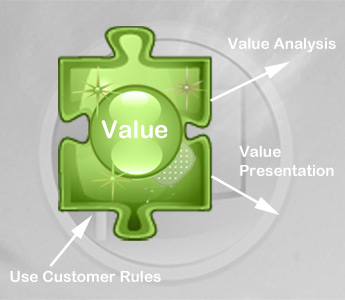
Value must be recognised by the customer - use his rules.
Selling Complex Services
Services are invisible, intangible so how best to sell them?
By describing clearly the value that they can bring to the customer.
This is done by estimating the value to the customer, the investment required and describing how a customer reference has received similar value .
Value Proposition
The delivery vehicle for communicating value is known as a value proposition and can be used for all kinds of sale but is particularly useful for complex services sales.
It is normally used initially in prospecting to get the attention of an executive and to get agreement from him to assign resources to work together on an evaluation plan. This will include the creation of a detailed business plan to ensure that it is the right decision for the company.
Simple Example
A very simple value proposition example using the services offered by O’Brien Business Solutions is shown below.
We believe that Customer A should be able to
- Achieve Business Growth by a minimum of 15% in the next year
Through an ability to:
- Launch New Products and Services
- Create a New High Performance Sales Team
- Win New Breakthrough major Accounts & create positive references
- a Business Solution designed and implemented to deliver delivering Sales and Marketing programmes.
- £YK.
- an 1 year contract and a start within 2 weeks.
- a similar Business Solution to Customer Reference A where a Business Growth of 20% was achieved in the same timeframe.
A more complicated BPO example
We believe that Company A should be able to
- Increase efficiency by 10% resulting in a 5% increase in profits per annum.
- With an upside of
- Improve knowledge sharing, security and workforce effectiveness
Through the ability to
- Design and implement new business processes using the latest technology
As a result of
- Outsourcing specific document intensive processes in HR, Legal & Supply Chain departments
For an investment of
- Set up – £XM set up
- Ongoing – Annual Service charge of £YM
Based on the following Assumptions
- 5 Year contract
- Set up in Yr 1
- Relevant staff transferred according to TUPE.
- Benefits realized in years 2-5.
Best relationships are based on value
Value is referenced throughout the sale. It may well start with a straw-man, built using data from a previously successful customer or reference and extrapolated to address this particular customer. It will be developed as the sale proceeds as more detail on the solution is developed and information on the assumptions is discovered. In some cases, some pilots may need to be implemented to test some key assumptions in the value equation.
The best relationships in business have the delivery of value as their foundation. A sales person that is perceived to consistently deliver value (advice, information, solutions) will be better placed to form better relationships.
Value flows throughout the organisation
For instance the CEO may have an objective of increasing the average revenue per user. This will be come a lead generation objective by the marketing department and an opportunity conversion objective by sales. A Value chain may be created to move from clearly known objectives at the top of the organisation to create new ones lower down the organisation.
Selling Complex Services into the Early Market
Selling into the Early Market is characterised by no or very limited customer references that will underpin the value proposition.
Whilst the Early Market is also characterised by buyers that are more innovative and as such prepared to take a risk, they do need some rationale for taking a decision to proceed.
Services do have more difficulties here than say selling a product like a piece of equipment in that a piece of equipment can be tested by a third party and the benefits verified.
Complex services such as BPO require at least one customer reference before the value proposition mat be truly verified. And as such it underlines how important the customer references are and therefore it is worth the company putting a lot of resources into obtaining the first contract an delivering it. It is worth noting also that it will take time before the benefits can be calculated and therefore will take time before the contract can become a true customer reference.
What can be done in the absence of a customer reference? A number of options can be explored:
- Start with a good relationship and trust as a foundation?
- Can you use process that is being done inside (selling) company’s own organisation?
- Does the new process utilize a core competence of the (selling) company? For instance a new technology that will improve the process. Examine its use in customer processes and obtain results.
- Utilize Market research to verify the value proposition.
There are two methods to achieving the market research:
- Find market research by a respected third party that will verify the claims made in the value proposition.
- If adequate market research is not available then conduct bespoke market research that will verify the claims made in the value proposition.
Lead Generation Terminology
Target Market
The Target Market or Target Market segment is a list of companies (B2B) or consumers (B2C) that possess the required buyer profile that make them pre-disposed to buy the product.
Territory
A territory is a part of the target market which has been allocated to a sales person or sales team.
A Lead
A lead is a potential opportunity sometimes known as a prospect – For example, a person met at a conference who expressed interest, or someone who filled out a form on the company website.
Lead Conversion (Or Qualification)
If the lead is qualified and the salesperson and decides to pursue it, the lead is “converted,” and becomes an opportunity. ( Note that the term conversion is used somewhat loosely and in many cases in Digital Marketing does not end up with an opportunity but with a (more qualified) lead that still requires further qualification before it becomes an opportunity.
An Opportunity
Opportunities are the sales and pending deals that are tracked in that Sales Pipeline or Funnel. The pipeline is built by adding more opportunities will contribute to the forecast.
Opportunity Qualification
Opportunity Qualification means that the prospect has provided information and performed certain actions that show that they are at a minimum in the market for the product, have the budget to buy and are willing to do so within a reasonable timeframe.
Qualification is tailored to the specific sales process which is itself aligned to the specific buying process in place.
In a simple B2C eCommerce transaction the qualification is a very simple process.
In B2B solution selling the qualification is a process that may be spread over weeks or months that forms a large part of the sales process due to the relative complexity of the buying process.
For instance in B2B solution selling:
- A Lead may be qualified initially by an internal telemarketing team who may deem it good enough to pass on to the field sales team.
- The Field sales team would initially qualify the company known as a suspect to avoid confusion with the term prospect. At this stage it would enter the funnel as a qualified suspect.
- Further levels of Qualification would then take place with the other members of the buying team such as the Sponsor (Person Driving the Project) and the Power Sponsor (Normally at Executive or C Level).
An Account
An account is the company or consumer that makes the purchase. An account may deal with several opportunities.
Digital Marketing Strategy
Build Foundation for Success
The key to success is to create:
- Clear Value objectives (or Clear Return on Investment objectives or Business Case)
- Clear measurement (“You can’t manage what you don’t measure”)
Value = Total Benefits – Total Investment.
Deliver Value
The Value delivered by a Digital Marketing Strategy is:
- Customer Sales
- Part or all of the sales process depending on sale complexity.
- For Complex B2B Digital Marketing can:
- Create Awareness & Stimulate interest,
- Generate Leads
- Audience Engagement
- Customer/Market Insight
- Is the market aware, Ready to buy? Are my customers satisfied?
- Used for Product Development or to Gauge the Appropriate Sales & Marketing Strategy.
This post will focus only on Customer Sales & Audience Engagement.
Deliver Customer Sales
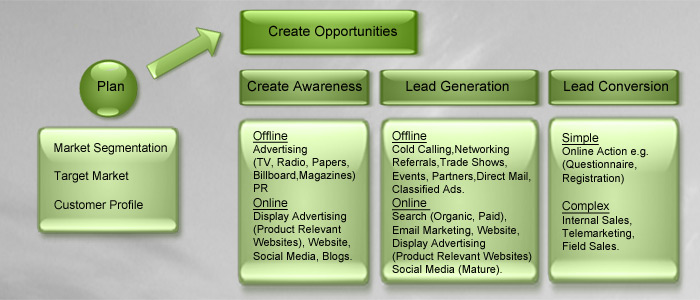
Digital (Online) Marketing integrated into the Sales Process
Digital Marketing allows niche markets to be targeted at a comparatively reduced cost.
Create Awareness
Use
- Display Advertising
- on websites that are relevant to the product being sold.
- Social Media & Blogs
- to engage with target market, to help educate and to announce new products.
- Email Marketing
- to distribute newsletters, whitepapers to stimulate interest.
- Website
- to educate.
Use in combination with Offline Marketing in the right blend to enhance success.
Generate Leads
Use
- Search (a mixture of organic and paid),
- Display Advertising (on websites that are relevant to the product being sold) &
- Email Marketing.
- Social media (networking and leads from engaged audience)
- Website (Capture inbound inquiries)
Use in combination with Offline Marketing in the right blend to enhance success.
Search has historically been the strongest digital channel for lead generation. It has been found that the yield is improved when combined with other channels such as Display Advertising.
Demonstrate Value using a Marketing Funnel
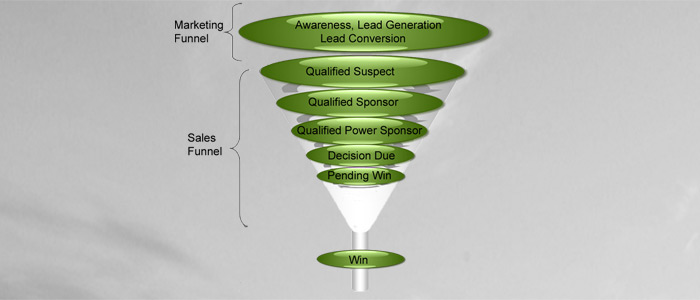
Use Marketing Funnel Above Sales Funnel to demonstrate Value
Whether you are B 2 B, B 2 C or non profit your marketing activities can be best viewed using the sales funnel.
Marketing at its heart is geared towards lead generation, but can also help in development and closure. The Value of any Marketing Campaign must be measured in the number of leads generated and opportunities created.
A Marketing Funnel may therefore be added above the Sales funnel. The exact breakdown of the Marketing and Sales Funnels will vary depending on the nature of the customer buying process. In general for B2B, the Marketing Funnel moves the target market members to Awareness, To Lead and To Converted Lead which then becomes an Opportunity for development by Sales. In Small Sales Teams, with no specialized Marketing help, this may well be all done by the sales team.
Demonstrate Value using an ROI Model
The actions to create a model are as follows:
- Map out a number of channels whereby a target company engages and becomes a lead, for example:
- Search Engine –>Main Site –>Download Whitepaper –>Registration
- Search Engine –>Blog–>Main Site–>Enquiry Form
- Twitter–>Blog–>Enquiry Form
- Facebook Fan page–>Main Site–>Enquiry Form
- Display Advertising Banner–>Product Microsite–>Main Site –>Enquiry Form
- Create KPIs and predicted relationships between KPIs and Leads generated, for example:
- Main Site Visitors
- Actions Performed (eg Download Whitepapers)
- Facebook Fans
- Twitter Followers
- Create Model
- Predict Customer sales
- Estimate Break down by Lead Generated and Path
- Estimate Costs
- Do Pilot Campaigns
- Compare Different blends and strategies
- Implement most successful on full market.
Initially, Social Media will be all about building awareness but if an engaged audience can be created then inevitably it will generate leads.
Social Media sites like Linked In are used by Sales Teams as part of their networking strategies.
Measurement and evaluation are very important. Every business is different and requires some testing to achieve the optimum blend of digital marketing channels.
Deliver Audience Engagement
The collateral benefit of Digital Marketing strategy is the creation and growth of engaged audiences (customers and prospects). A more engaged audience delivers the following benefits
- More Likely to purchase – A Mature engaged Social Media Audience can be a Lead Generation source.
- Better Retention – more likely to stay
- Brand Advocate leading to referrals and good references
Creating a High Performance Sales Team: – Hiring
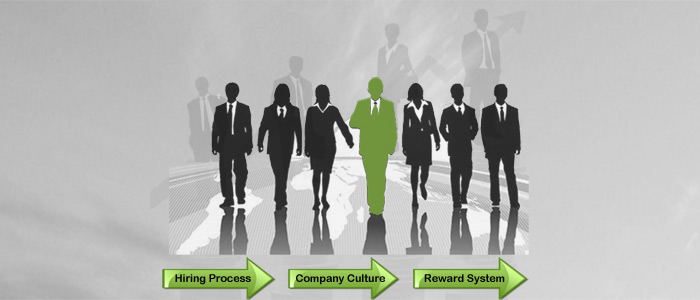
The foundation for creating a high Performance Sales team is hiring the right Sales People
A key to success is to create a professional hiring process. This means that the role well defined and the process very professional. It will recognise, target and attract sales people with the potential to be high performers. Good people always have options so they must be sold to. Potential high performers are attracted by the the right company culture and its reward system.
The reward system includes monetary items but also many soft items such as job satisfaction growth prospects and status.